Religions: The Tao compared to Christianity
by | Posted October 24th at 8:03am
When discussing how “The Tao” aligns with Christian moral values, it helps to view it through two distinct lenses: C.S. Lewis’s definition of “The Tao” (as universal Natural Law) and traditional philosophical Taoism, compared with Christian ethics. Predominantly, Taoism does not recognize a Divine Creator nor the bible that promises redemption as Christians do, who rely on the Word of God for moral guidance and overcoming the dark side.
1. C.S. Lewis and “The Tao” as Natural Law
In his influential work The Abolition of Man, Christian thinker C.S. Lewis used the term “The Tao” to refer to the universal, objective moral law woven into human nature and shared across civilizations (Christianity, Judaism, Hinduism, Confucianism, Stoicism, and Greek philosophy).
From this perspective, the Tao and Christian morality do not merely line up—Christian ethics are the fullest expression of the Tao. Lewis pointed out that core human duties across cultures closely mirror biblical teaching, yet with a key difference, as noted in Part 3.
-
Duty to Parents & Elders: Echoes the Fifth Commandment (“Honour your father and mother”).
-
Protection of the Weak & Defenceless: Aligns with Biblical commands to protect the orphan, widow, and stranger.
-
Honesty & Justice: Demands truth-telling, condemnation of false witness, and fair dealing.
-
Self-Restraint & Mercy: Discourages greed, pride, and wanton violence.
In Christian theology, this shared baseline is often called Natural Law or General Revelation—the idea that God has “written the law on every human heart” (Romans 2:15).
2. Moral Overlaps: Where Traditional Taoism and Christianity Agree
When comparing the Tao Te Ching and traditional Taoist ethical teachings directly to Christian moral principles, several striking virtues align:
| Moral Concept | Taoist Value (Tao Te Ching) | Christian Value (New Testament) |
| Humility | Overcoming ego; placing oneself last to lead (Ch. 7, 67). | “The first shall be last, and the last first” (Mark 10:31). |
| Non-Aggression | Returning good for injury; softness over force (Ch. 63). | “Turn the other cheek” and “Love your enemies” (Matthew 5:39, 44). |
| Simplicity & Anti-Greed | Rejecting material ambition and endless accumulation (Ch. 12). | “Do not store up for yourselves treasures on earth” (Matthew 6:19). |
| Gentleness & Patience | Wu wei (effortless action without forcing/controlling others). | Fruit of the Spirit: gentleness, patience, and self-control (Galatians 5:22–23). |
3. Key Differences in Foundation & Purpose
While the ethical behaviours often look similar on the surface, the underlying worldviews differ significantly:
-
Personal God vs. Impersonal Principle:
-
Taoism: The Tao is an impersonal force, flow, or pattern of the cosmos rather than a conscious creator who issues commands.
-
Christianity: Objective moral values are rooted in the holy, loving nature of a personal God who created the world and holds humanity morally accountable.
-
-
Absolute Morality vs. Situational Harmony:
-
Taoism: Morality focuses on balance, harmony with nature, and flexibility. Good and evil are often seen as complementary opposites (Yin and Yang) within the unity of the Tao.
-
Christianity: Good and evil are absolute. God is light without darkness (1 John 1:5), and sin is a real rupture in the relationship with God that requires redemption.
-
-
Self-Effort/Yielding vs. Grace & Redemption:
-
Taoism: Solves human conflict by letting go of desire, ego, and artificial social rules to blend into the natural order.
-
Christianity: Teaches that human beings cannot fulfill the moral law through self-effort alone; salvation and moral transformation require God’s grace and the Holy Spirit, made possible through Jesus Christ.
-
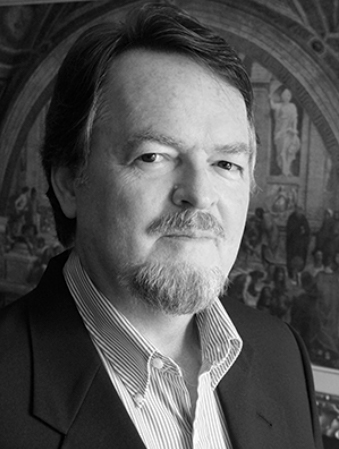
Article posted by Glen R. Jackman, founder of GraceProclaimed.org
Glen has optimized his eldership role to teach the full scope of the New Covenant of Jesus Christ without
boundaries.
You can read his testimony.