Believers are Royal Co-heirs and Sons of God
by | Posted October 14th at 12:23am
1. The Divine Blueprint: Royal Sonship
-
2 Samuel 7:12–14: God establishes that David’s royal descendant will inherit a kingdom: “I will be his Father, and he shall be My son.” Royal authority is expressed through the legal mechanism of divine adoption and sonship.
-
Psalm 2:7–8: The Father declares to the Messiah: “You are My Son; today I have begotten You. Ask of Me, and I will give You the nations as Your inheritance.” Government and global authority are strictly handed down as a son’s inheritance.
2. Christ: The Ultimate “Son of the Throne”
-
Isaiah 9:6–7: “For unto us a Child is born, unto us a Son is given; and the government will be upon His shoulder… Upon the throne of David and over His kingdom.” Messiah rules not as an outside dictator, but as the legally appointed Son upon the throne.
-
Hebrews 1:8: “But to the Son He says: ‘Your throne, O God, is forever and ever; a sceptre of righteousness is the sceptre of Your kingdom.'”
Absolute Sovereignty Belongs to Christ Alone
Abraham Kuyper’s theology of governance rests on a core premise: no human ruler or state possesses inherent or absolute authority. All authority is derived from Jesus Christ, who reigns as the cosmic Messiah.
Kuyper summarized this rule in his famous 1880 inaugural address at the Free University of Amsterdam:
“There is not a square inch in the whole domain of our human existence over which Christ, who is Sovereign over all, does not cry: ‘Mine!'”
Because Christ holds total authority over heaven and earth (Matthew 28:18), no earthly government can claim ultimate sovereignty over human conscience, family, or faith.
3. Believers as Co-Heirs: Delegated Governmental Seat
- Hebrews 12:2: Our place has been prepared by Jesus, our forerunner. “Let us keep our eyes on Jesus, the champion who initiates and perfects our faith. Because of the joy awaiting him, he endured the cross, disregarding its shame. Now he is seated in the place of honour beside God’s throne.”
-
Ephesians 2:6: God “raised us up together, and made us sit together in the heavenly places in Christ Jesus.” Authority is positional. Believers do not fight toward authority; they govern from a seated position in the heavenly places alongside Christ.
-
Romans 8:16–17: “The Spirit Himself bears witness with our spirit that we are children of God, and if children, then heirs—heirs of God and joint heirs with Christ…” Government is an inherited family duty.
-
Galatians 4:7: “Therefore you are no longer a slave but a son, and if a son, then an heir of God through Christ.” Slaves carry out tasks; sons carry legal authority to administer the Father’s domain.
4. The Biblical Scope of Governance
Scripture outlines how this “sonship on the throne” translates into practical, judicial, and spiritual governance. Kuyper defined the Doctrine of the Sphere of Sovereignty.
| Dimensional Realm | Biblical Mandate | Scriptural Reference |
| Cosmic & Angelic Governance | Judging and exercising authority over spiritual powers. | “Do you not know that we shall judge angels? How much more, things that pertain to this life?” (1 Corinthians 6:3) |
| Judicial Earthly Governance | Enforcing righteousness, ruling over nations, and executing truth. | “To him who overcomes… I will give power over the nations—‘He shall rule them with a rod of iron.’” (Revelation 2:26–27) |
| Legislative / Priestly Dominion | Binding and loosing mandates on earth backed by heaven’s court. | “Whatever you bind on earth will be bound in heaven… I bestow upon you a kingdom, just as My Father bestowed one upon Me.” (Matthew 18:18, Luke 22:29) |
Instead of centralizing governance within a state or church apparatus, Kuyper taught that God ordained distinct, independent spheres of authority within creation (e.g., the state, the family, the church, business, science, and art).
-
Direct Responsibility to God: Each sphere derives its authority directly from God, not from the civil government. A father does not rule his family because the state allowed him to; he rules because God assigned that authority directly to the family sphere.
-
Limited Civil Government: Civil government is only one sphere among many. Its primary role is to act as a minister of public justice—resolving disputes between spheres, protecting the weak, and maintaining public order.
Kuyper warned against civil government becoming an “octopus” that oversteps its creational boundaries to absorb the authority of other God-ordained spheres.
Civil Authority as a Post-Fall Remedy
Kuyper distinguished between original creational order and the mechanical authority of the state.
-
In a sinless world, human governance would naturally function through organic relationships (families, communities, shared labour).
-
Because of sin, God instituted the coercive authority of the state (magistracy) backed by the power of the sword (Romans 13) as a divine gift of common grace to prevent chaos.
Earthly rulers sit on temporary, delegated seats of judgment strictly to restrain evil and uphold justice.
5. The Believer’s Role: Church as Institute vs. Church as Organism
Regarding how believers exercise governance, Kuyper made a key distinction:
                     ┌─────────────────────────────────────────┐
                     │          JESUS CHRIST THE KING          │
                     │    (Absolute Sovereign over Creation)   │
                     └────────────────────┬────────────────────┘
                                          │
                  ┌───────────────────────┴───────────────────────┐
                  ▼                                               ▼
     ┌──────────────────────────┐                   ┌──────────────────────────┐
     │   CHURCH AS INSTITUTE    │                   │   CHURCH AS ORGANISM     │
     │  Word, Sacraments, Elders│                   │ Believers in All Spheres │
     └────────────┬─────────────┘                   └─────────────┬────────────┘
                  │                                               │
                  ▼                                               ▼
     (Gathers and equips saints)                     (Deploys into Public Life)
                                                                  │
                                            ┌─────────────────────┼─────────────────────┐
                                            ▼                     ▼                     ▼
                                     ┌─────────────┐       ┌─────────────┐       ┌─────────────┐
                                     │ Civil State │       │   Family    │       │  Business   │
                                     └─────────────┘       └─────────────┘       └─────────────┘
-
Church as Institute: The formal local church organization (pastors, sacraments, ecclesiastical discipline) does not hold political authority over the government.
-
Church as Organism: Believers equipped by the gospel step out into every domain of society—law, politics, medicine, education—to rule and steward those spheres under Christ’s Lordship.
Application to “Throne Authority”
For Kuyper, exercising divine or royal authority is not about establishing a theocracy through state power or clerical rule. Instead, believers exercise their seated authority in Christ by:
-
Refusing to deify the state: Resisting totalitarianism by maintaining that God alone is absolute Sovereign.
-
Honoring creational boundaries: Protecting the God-given integrity of the family, church, and individual conscience.
-
Bringing Christ’s Lordship into public life: Operating as redeemed image-bearers who administer justice and truth within their respective callings.
6. Exhortation to the Overcomer
“To him who overcomes I will grant to sit with Me on My throne, as I also overcame and sat down with My Father on His throne.”— Revelation 3:21
SOURCES for this study: I have referred to Abraham Kuyper a great deal in this study. My wife and I picked up his great masterpiece while browsing at Baker Books in Grand Rapids, Michigan: “The Work of the Holy Spirit”, which we continue to read for our devotions with our Logos devotional programs.
Essential Books & Primary Texts
-
-
Primary Source: Lectures on Calvinism by Abraham KuyperThe definitive starting point for Kuyper’s political and social theology. Delivered at Princeton in 1898, these six lectures outline how the absolute lordship of Christ requires distinct “spheres of authority” (State, Family, Church, Science, Art).
-
Primary Source: Our Program: A Christian Political Manifesto by Abraham KuyperTranslated by Harry van Dyke, this is Kuyper’s full political platform for the Anti-Revolutionary Party in the Netherlands. It translates abstract concepts of divine authority into concrete policy, public law, and civic responsibility.
-
Modern Synthesis: Political Visions and Illusions by David T. KoyzisA modern classic examining political ideologies (Liberalism, Nationalism, Socialism, Democracy) through the lens of Kuyperian Sphere Sovereignty and Catholic Subsidiarity. It shows how elevating any single political system over God’s ordained order creates structural tyranny.
-
Systematic Framework: A Christian Theory of the State by Herman DooyeweerdDooyeweerd was Kuyper’s primary philosophical successor. This book provides a rigorous academic grounding for how governmental authority is bounded by creation order and how believers operate within civil institutions without deifying the state.
-
Prominent Authors & Scholars
-
-
Abraham Kuyper (1837–1920): Dutch Prime Minister, theologian, and founder of the Free University of Amsterdam. He popularized the doctrine of Sphere Sovereignty, anchoring human authority entirely in delegated divine appointment.
-
Herman Dooyeweerd (1894–1977): Developed Kuyper’s insights into a formal Christian philosophy (Philosophy of the Cosmonomic Idea), mapping how different societal spheres relate to one another under God’s law.
-
Richard J. Mouw: Former president of Fuller Theological Seminary and author of Abraham Kuyper: That in All Things He Might Have the Preeminence. Mouw translates Kuyper’s 19th-century Dutch political context into modern pluralistic societies.
-
James D. Bratt: Historian and biographer of Kuyper (Abraham Kuyper: Modern Calvinist, Christian Democrat), offering detailed insight into how Kuyper practiced his political theology while holding public office.
-
Recommended YouTube Channels & Videos
-
-
“Abraham Kuyper’s Sphere Sovereignty” (The Center for Public Justice / CPJ): Look for lectures and webinars hosted by CPJ explaining how sphere sovereignty protects civil liberties and limits governmental overreach.
-
“Lectures on Calvinism by Abraham Kuyper” (Audiobook & Analysis Channels): Search for narrated editions of his 1898 Stone Lectures, particularly Lecture 3: Calvinism and Politics. This specific lecture details how no authority on earth is intrinsic; all power is delegated down from Christ’s throne.
-
“Kuyperian Political Theology” (Reformed Forum): Discussions between theologians on the practical distinction between the Church as Institute (the local church hierarchy) and the Church as Organism (believers governing in secular callings). Google Search Link
-
Websites & Organizations Devoted to Sphere Sovereignty
-
-
The Center for Public Justice (CPJ) (
cpjustice.org):An independent, non-partisan public policy organization explicitly rooted in the Kuyperian tradition. They publish research and policy frameworks based on structural pluralism and sphere sovereignty. -
The Kuyper Center at Princeton Theological Seminary (
ptsem.edu):Hosts archives, annual conferences, and academic journals focusing on Kuyper’s public theology, political engagements, and modern applications of Reformed social thought. -
Comment Magazine / Cardus (
comment.org):A Christian think-tank based in North America dedicated to renewing social architecture. They regularly publish essays exploring how sphere sovereignty applies to modern economics, education, and civic governance. -
In All Things (
inallthings.org):An online publication operated by Dordt University that explores how Christ’s lordship claims every cultural sphere, with extensive articles breaking down Kuyperian thought for laypersons.
-
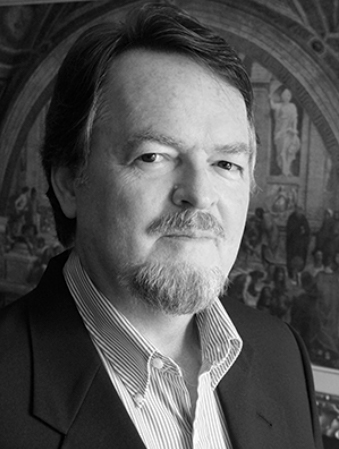
Article posted by Glen R. Jackman, founder of GraceProclaimed.org
Glen has optimized his eldership role to teach the full scope of the New Covenant of Jesus Christ without
boundaries.
You can read his testimony.